
How Provincetown Shapes LGBTQ Literary Fiction
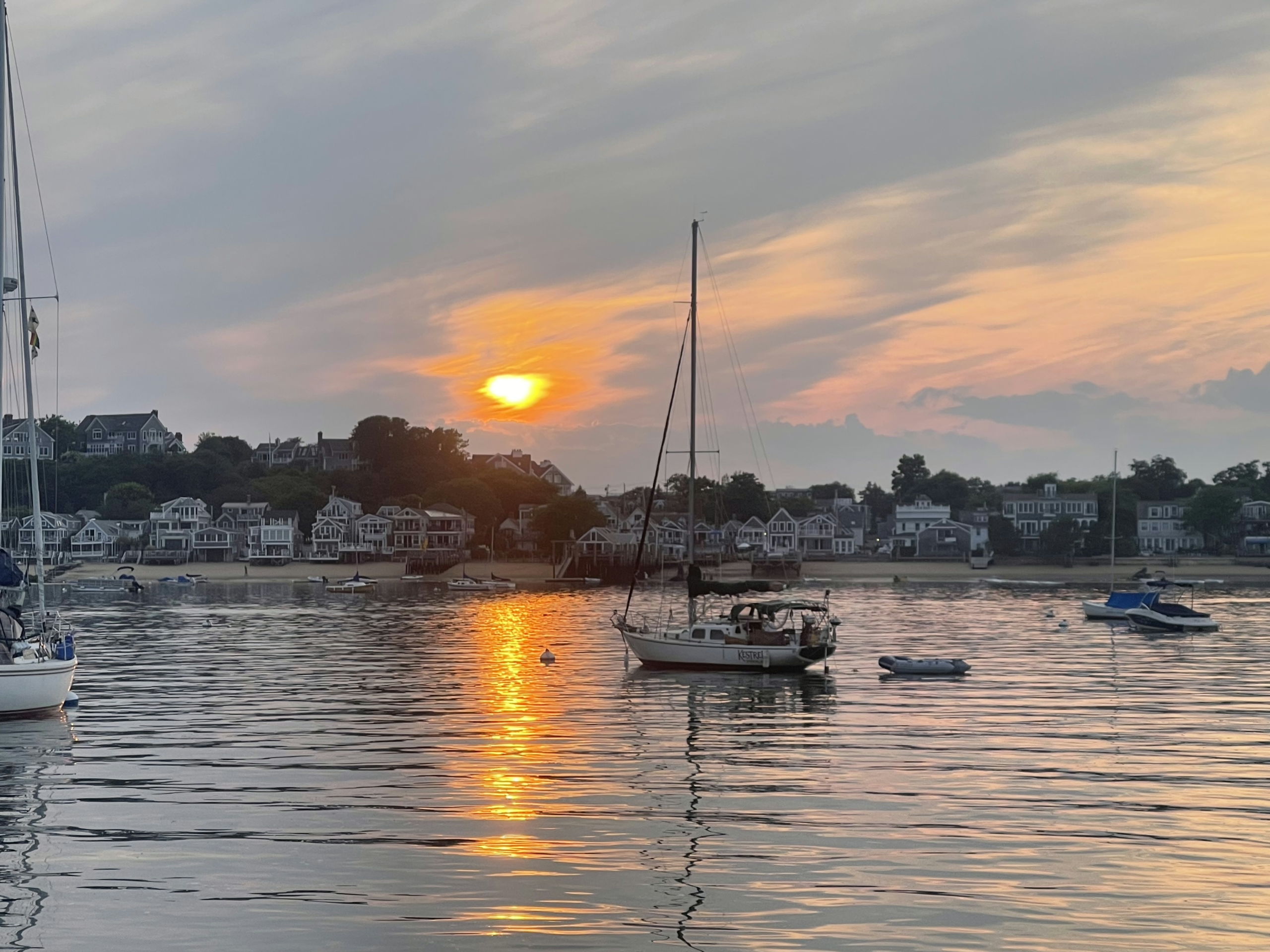
The Place Where Reinvention Is a Birthright
Provincetown has always been more than a backdrop for my fiction. It’s a place where reinvention isn’t just accepted, it’s expected. For me, Provincetown LGBTQ+ literary fiction isn’t an abstract concept; it’s a lived experience shaped by the artists, outsiders, and queer communitites who come here seeking both refuge and transformation. For over a century, LGBTQ people and the beautifully unconventional have arrived here hoping for a fresh chapter. Some stay for a season; others stay for good. But nearly everyone finds a version of themselves they didn’t know they’d been missing.
For a writer of LGBTQ+ literary fiction, that kind of energy is irresistible.
A Community That Lives Between Worlds
Provincetown exists in a liminal space between land and sea, past and future, silence and spectacle. Every tide shift feels like a story. The people here carry their histories with them, but they’re also always reaching toward something new. That duality shapes the emotional rhythm of my novels.
My fictional characters often live at the crossroads of identity and longing. Provincetown mirrors that beautifully. You can feel the ache of possibility in the air, and it gives every interaction a deeper resonance.
The Weight—and Gift—of LGBTQ+ History
Long before my characters walked its streets, Provincetown was a refuge. It became one of the first places where LGBTQ individuals could live openly, find community, and build chosen families without apology. Those layers of history inform every story I write.
When I write about chosen family, resilience, or the quiet courage of becoming oneself, I’m drawing from a lineage that thrived here long before I picked up a pen. The town’s past is never just scenery—it’s part of the emotional architecture of my fiction.
Why Chosen Family Thrives Here
One of the recurring themes in my novels—especially The HomePort Journals and The Distance Between Us—is the creation of chosen family. Provincetown makes that easy to believe. Its narrow streets and tightly knit neighborhoods force encounters that would never happen elsewhere. The town nudges people into each other’s lives.
A retired painter befriending a young runaway, a quiet writer crossing paths with a flamboyant performer, a lifelong fisherman sharing secrets with a newcomer, these are relationships Provincetown makes possible. And those relationships are the heart of my fiction.
Cape Cod Light as a Character of Its Own
Writers often talk about atmosphere, but in Provincetown, the light is practically a protagonist. It shifts constantly—silver one moment, gold the next, then bruised purple as a storm rolls in off the bay. For many artists, the light is what brought them here in the first place.
In fiction, atmosphere shapes tone. When I describe a character standing at Herring Cove or staring out at the Moors, I’m not just setting the scene, I’m amplifying their emotional state. The interplay of light, weather, and landscape becomes a mirror for the inner lives of my characters.
Queerness, Creativity, and the Permission to Be Fully Oneself
In many towns, people ease themselves into authenticity carefully, quietly. Provincetown offers the opposite: an invitation to be fully, gloriously yourself. For LGBTQ+ characters navigating coming-of-age, coming-out, or coming-undone moments, that kind of permission is transformative.
When I write queer characters who find pieces of themselves here, it isn’t wishful thinking. It happens all the time.
Small-Town Dynamics with Outsized Emotional Stakes
Provincetown is tiny, barely three miles long, but emotionally expansive. The community can be tender, fractious, intimate, unforgiving, or fiercely loyal, sometimes all in the same afternoon. When a disagreement happens here, it doesn’t vanish into the noise of a big city. It lingers. It matters.
That tension between closeness and conflict creates rich soil for fiction. It’s what makes Provincetown more than a beautiful setting. It makes the town an active participant in the story.
How Provincetown Influences My Novels
A novel about belonging, reinvention, and the quiet bonds that sustain us. Every character is shaped by the town’s layered history and its embrace of found family.
This book explores the space between who we are and who we hope to be. Provincetown’s geography—isolated yet welcoming—becomes a metaphor for that emotional journey.
A collection of moments when characters discover truths they’ve carefully avoided. The town’s unpredictability gives those revelations weight.
Why I Believe Provincetown Matters in LGBTQ+ Fiction
Setting is not neutral. It shapes what stories can be told—and how readers receive them. Provincetown creates a narrative frame that supports LGBTQ joy, LGBTQ history,
LGBTQ struggle, LGBTQ resilience. and LGBTQ reinvention. Most importantly, it allows stories to exist outside the trauma-driven narratives LGBTQ fiction is often relegated to.
In Provincetown, as I know and love it, characters are allowed to thrive, not just survive.
A Final Thought
When readers step into my novels, I hope they resonate with what Provincetown offers: space to breathe, space to become, and space to be seen. It is one town that refuses to flatten people into simple categories. That refusal is what makes LGBTQ+ literary fiction possible and essential. You can find my work here.
Thanks for reading,

Photo © 2022 Ric Ide
www.acburch.com
- How Provincetown Shapes LGBTQ Literary Fiction - December 7, 2025
Leave a Reply
Want to join the discussion?Feel free to contribute!